The licence rollout
Seats for Copilot or ChatGPT, a launch email, a spike in logins. By week six the usage dashboard tells the real story.
The tool works. Nobody connected it to the work.
Corporate AI training
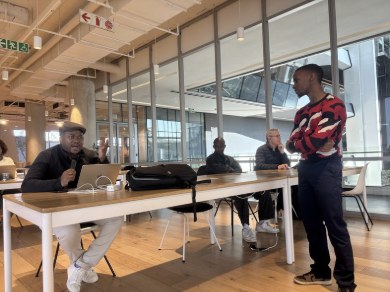
Your people already have the AI licence. What they don't have is a method for the documents they produce every week. This is hands-on AI training for corporate teams, delivered as live workshops with packs to follow along. We time how long your people take today, train them on their own reports, proposals and board packs, then measure it again. Priced per employee, against the capacity it returns.
Organisations we have worked with






What you've already tried
Most organisations have already spent on AI. The spend shows up in the budget. It rarely shows up in how long the monthly report takes.
Seats for Copilot or ChatGPT, a launch email, a spike in logins. By week six the usage dashboard tells the real story.
The tool works. Nobody connected it to the work.
An inspiring hour on what AI can do. Everyone nods. Monday's board pack is built exactly the way it was last month.
Nobody connected the tool to the board pack.
Forty minutes of generic video and a green tick in the LMS. Completion was measured. Capability wasn't.
The tool was taught. The documents were left alone.
One clever proof of concept in one team. It impressed ExCo, then never left the sandbox.
It connected the tool to a demo, not to the reports people produce every Monday.
AI restricted pending review. Meanwhile people paste company documents into personal accounts, because the deadline didn't wait.
The tool was locked. The risk walked right past it.
Global research. Your organisation's own numbers come from the baseline.
Nobody connected it to the documents your people actually produce. Connecting it is the whole job.
The difference
Adoption stalls when training teaches the tool and leaves the work alone. We start from the other end.
The tool already works. What doesn't work is the gap between the tool and the document your person produces every Monday morning. A monthly report doesn't need someone who knows more AI features. It needs a method: a structured brief instead of a blank page, the right source material already summarised, the house style applied in seconds instead of hours. Close that gap and the tool does what the licence promised.
That gap is where we work.
Here's what that looks like, line by line.

Who runs the room
Phila Ngwenya founded GrowthCred to put AI to work on the documents that run a business, not to demo it. Not to talk about what AI might do one day, but to make this month's report faster this month.
Read the client stories“My Claude has been operating a lot better since the last session.”
The transformation
A report that takes six hours takes two. Not by learning more features, and not by skipping review, but by connecting the tool to the actual document and removing what surrounds it: the blank page, the hunt for last month's numbers, the reformatting, the third rewrite for a different audience.
One monthly report, in hours
One monthly report, in hours: 6 hours before, 2 hours after.
Illustrative. Your baseline sets the real starting point.
TaiAscendClient result
3 days2 hrs
A document process that took three days now takes two hours.
Read the client storiesThe business case
Every month the gap stays open, your team produces the same documents at the same speed, at full salary. The licence you already paid for sits open on their screens, and the reports take as long as they always did. The cost isn't what training costs. It's what the gap costs, every month you leave it.
Move the numbers to match one team. The model is deliberately simple, so you can check it before you take it to ExCo.
Capacity returned, per year
R3.2M
That last figure is the ceiling on what training should cost per head. A per-employee fee well under it is the case for training; one near it is the case against.
Capacity is not cash. Saved hours only become savings if output grows or hiring slows, so we agree with you where the hours go before the first session.
Estimate from your inputs: 46 working weeks, 40-hour weeks. Not a result measured at your organisation.
For the people who sign it off
CFO / FD
“What's the return, in rand?”
The baseline and the thirty-day measurement are in rand per team, so the return is a number, not a feeling.
HR / L&D
“What happens when people leave?”
Every role has a written playbook, so new hires inherit the method on day one instead of waiting for the next training budget.
COO / Heads of department
“Which documents get faster?”
The reports, packs and proposals your decisions wait for are the ones we train on first. You name them at the baseline.
IT / Risk
“What about our data?”
We train on your sanctioned platform, practise on redacted material, and write what may never go into an AI tool into every pack.
Delivery
We time a sample of the documents each team produces today: monthly reports, proposals, board packs, client letters. That is the number we are measured against.
Presentation-style sessions, in the room or online, run team by team. Every person works on a real document from their own desk, not a demo on ours.
Each role gets a printed and digital pack to follow during the session and keep afterwards, so the method outlives the day.
Thirty days later we time the same documents again and report to the sponsor: hours returned, by team, in rand.
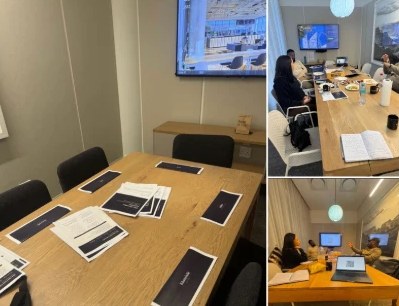
What every employee leaves with
Pricing
You already paid for the tool. This is the missing piece: the method that connects it to the work. You pay per person trained, so the investment scales with the headcount that produces the return. We quote after the baseline, so the per-employee fee sits beside the per-employee value in the same proposal. If the numbers don't make the case, you'll see that before you sign.
One department, one document type
Prove the number on one team before anyone commits to a rollout.
Request a proposal for a pilot teamSeveral teams, a pack per role
The documents each team produces most, trained team by team, measured team by team.
Request a proposal for a department rolloutMultiple departments or sites
Phased across the business, with the baseline and measurement reported to one sponsor.
Request a proposal for a organisation-wideEvery tier is priced per employee. The rate is set in the proposal, after the baseline.
Every week this stays unfixed, your people open the AI tool, stare at it, and go back to the way they've always done it. The licence renews. The reports stay slow.
And odds are that right now someone on your team is pasting a client document into a personal AI account, because the deadline didn't wait for the training budget.
The tool was never the problem. The connection was. This is the connection.
Next step
Tell us the team and the documents that slow it down. We'll come back with a baseline plan and a per-employee quote.
One confirmation email, one reply. No list, no newsletter.
Questions